
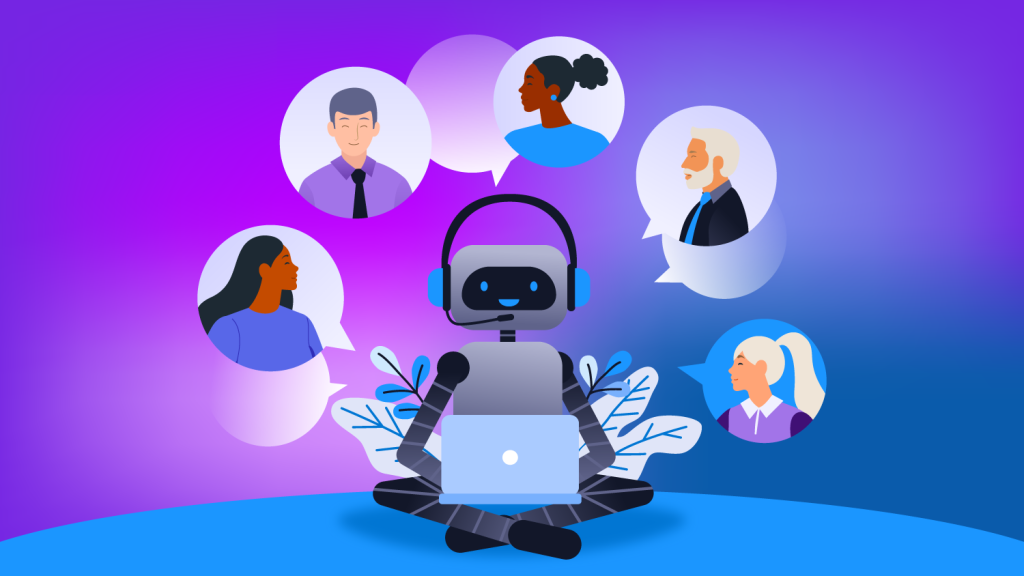
In an increasingly digital world, chatbots have become essential tools for companies, institutions, and platforms that want to offer instant support, automate processes, and improve user experience. Although they are now everywhere, many people still wonder what a chatbot really is and what it can do.
This article provides a clear and updated overview of what a chatbot is and the key functions it performs in 2025.
1. What Is a Chatbot?
A chatbot is a computer program designed to interact with people using natural language, either through text or voice. Its purpose is to simulate a human conversation and provide fast, coherent, and useful responses.
There are two main types of chatbots:
Rule‑based chatbots
They respond according to predefined instructions. Ideal for simple, repetitive tasks.
AI‑powered chatbots
They use language models and machine learning to understand complex questions, adapt to context, and generate more natural responses. They can learn, improve, and handle open‑ended conversations.
2. What Is a Chatbot Used For? Key Functions
Chatbots perform multiple functions depending on the sector and the type of interaction required. These are the most common and strategic ones:
1. 24/7 Customer Support
They answer frequently asked questions, solve basic issues, and guide users without human intervention. Benefits include:
- Full availability
- Reduced waiting times
- Lower workload for human teams
2. Automation of Repetitive Tasks
They can manage processes such as:
- Reservations
- Status checks
- Data updates
- Sending reminders
This frees teams to focus on higher‑value tasks.
3. Shopping Assistance and Recommendations
In e‑commerce, chatbots help users:
- Discover products
- Compare options
- Navigate the purchase process
They improve conversion rates and customer experience.
4. Technical Support
They diagnose common issues, offer quick solutions, or escalate the case to the right team when needed.
5. Education and Learning
In educational platforms, chatbots:
- Answer questions
- Explain concepts
- Support learners throughout their progress
They are especially valuable in digital learning environments.
6. Internal Company Support
They assist employees with:
- HR inquiries
- Internal processes
- Access to documentation
- Workflow automation
7. Advanced Conversational Experiences
AI‑powered chatbots can:
- Act as personalized assistants
- Generate content
- Maintain complex conversations
- Integrate with multiple tools and platforms
3. Why Chatbots Are Essential in 2026
The adoption of chatbots continues to grow for three main reasons:
Efficiency
They reduce operational costs and speed up processes.
Scalability
They can assist thousands of users simultaneously.
User Experience
They provide immediate, personalized, and consistent responses.
In sectors like education, healthcare, e‑commerce, and public administration, chatbots have become a cornerstone of digital transformation.
Conclusion: A Key Tool for Modern Interaction
A chatbot is not just an automated assistant—it is a strategic component that enhances communication, optimizes processes, and delivers smoother, more accessible experiences. In a world where immediacy and personalization are essential, chatbots offer a clear competitive advantage for any organization.
📣 Thinking about integrating conversational AI into your reading or content platform? Bookset allows you to combine technology, accessibility, and advanced digital experiences for your users.
👉 Explore more at www.bookset.app
Chatbots #ArtificialIntelligence #Automation #UserExperience #Bookset